Crypto Lending Basics: Collateral, Liquidation, Counterparty Risk, and Why Yields Are Not Free
Crypto lending promises yield on idle assets and loans without selling your coins, but every return has a source and every loan has a risk. This guide breaks down collateral, liquidation, and counterparty risk so you understand where the yield comes from before you commit funds.
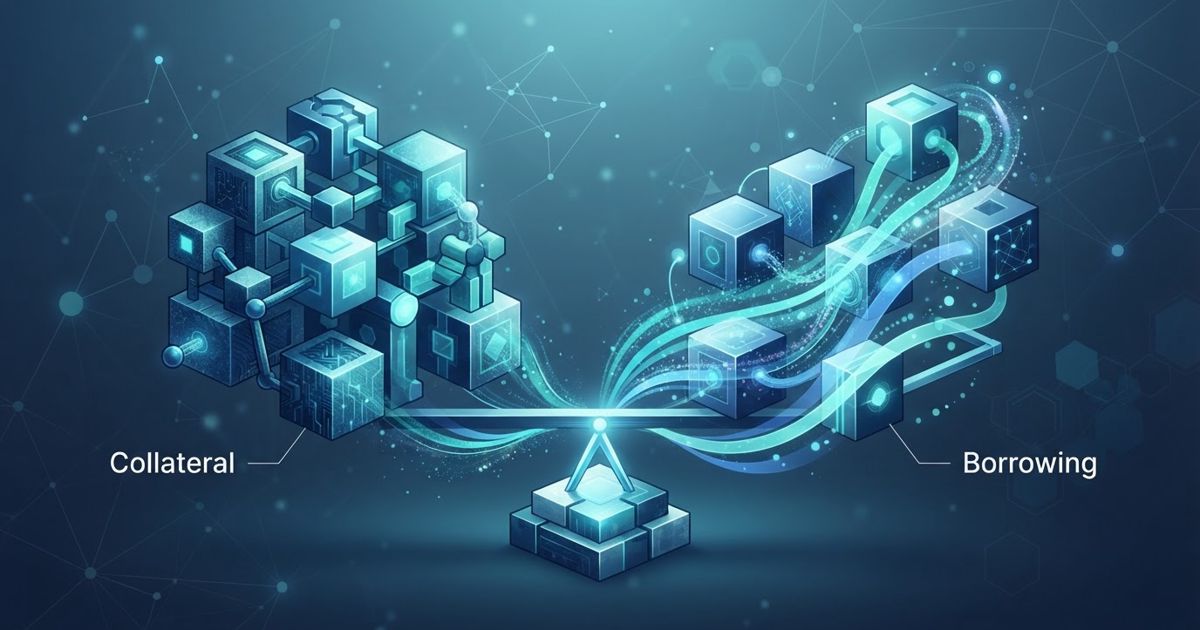
Table of contents
"Earn yield on your crypto" and "borrow cash without selling your coins" are two of the most seductive pitches in the industry. Both are real mechanisms, and both can be reasonable tools. But crypto lending is not a savings account, and the yield is never magic. Every return is paid by someone, for taking on some risk. Before you lend or borrow, the goal is to understand exactly where the money comes from and what could go wrong.
The two sides: lenders and borrowers
Crypto lending connects people who want to earn a return on assets they aren't using with people who want to borrow. There are two broad worlds:
- DeFi lending: smart-contract protocols where you deposit assets into a pool, and borrowers take loans against collateral, with interest rates set algorithmically by supply and demand.
- CeFi lending: a company takes custody of your assets and lends them out or deploys them, paying you a rate. Here you are trusting the company, not just code.
The mechanics rhyme, but the risks differ sharply. In DeFi you mostly face smart-contract and market risk; in CeFi you add the very real risk that the company itself fails. Several past CeFi collapses wiped out lenders who thought they held a safe, interest-bearing balance.
Collateral: why most crypto loans are over-collateralised
In traditional finance, loans are often under-collateralised — you borrow more than you post, backed by your income and credit history. Most crypto lending is the opposite: over-collateralised. To borrow, you lock up collateral worth more than the loan.
Why? Because the lender or protocol usually cannot pursue you personally, and crypto prices are volatile. Requiring extra collateral protects the lender if prices move against the loan. The ratio between what you borrow and your collateral is often called the loan-to-value, or LTV. A lower LTV means more of a buffer; a higher LTV means you are closer to the edge.
Liquidation: the risk that surprises beginners
Here is the mechanism that catches people off guard. If your collateral loses value — or the asset you borrowed gains value against it — your loan can become under-collateralised. When it crosses a defined threshold, the protocol or platform liquidates your collateral: it sells part or all of it to repay the loan and protect the system.
Key things to understand about liquidation:
- It can happen fast and automatically. In DeFi, liquidations are triggered by code and market prices, not by a courtesy call. A sharp drop can liquidate you in minutes.
- It often costs you extra. Liquidations usually carry a penalty or fee on top of losing the collateral that was sold, so you end up worse off than a simple sale would have been.
- Volatility is the enemy. The more volatile your collateral, the wider the buffer you need. Borrowing near the maximum LTV leaves almost no room for a normal price swing.
The practical lesson: if you borrow against crypto, borrow conservatively and monitor your position. A comfortable buffer is cheaper than a forced sale at the worst possible moment. The same liquidation dynamics appear across DeFi yield strategies, often stacked on top of other risks.
Counterparty risk: who actually holds your assets
This is the question that matters most in CeFi lending, and it is the one marketing pages avoid. When a platform pays you yield, ask: who is on the other side, and what are they doing with my coins?
- If the platform lends your assets to trading firms, you are exposed to those firms' solvency.
- If it deploys funds into strategies, you are exposed to those strategies losing money.
- If it commingles customer assets, a shortfall anywhere can become your loss.
- If it fails, "your" balance may become an unsecured claim in a bankruptcy, not something you can simply withdraw.
In DeFi, the "counterparty" is largely the smart contract and the collateral backing loans. That removes company risk but adds code risk: bugs, exploits, oracle manipulation, and governance failures. Neither model is risk-free; they simply relocate the risk. Thinking about where your assets actually sit is a useful habit before committing them to any lending venue.
Why the yield is never free
A healthy skepticism toward any advertised rate starts with one question: what is being done to generate this return? Yield in crypto lending typically comes from:
- Borrower demand paying interest to use assets (for leverage, trading, or liquidity).
- Protocol incentives — extra tokens handed out to attract deposits, which can be temporary and can fall in value.
- Risk-taking — deploying assets into strategies that can lose money.
None of these are free. A rate that looks far higher than everything else is not a gift; it is a signal that you are being paid more because the risk is higher, the incentive is subsidised and unsustainable, or something is being hidden. When you cannot explain the source of a yield, assume you are the source.
A beginner's risk checklist
Before you lend or borrow, work through this:
| Check | Why it matters |
|---|---|
| Where does the yield come from? | If you can't explain it, you can't price the risk. |
| Custodial or non-custodial? | Custodial adds company-failure risk on top of market risk. |
| What is my liquidation threshold? | Know exactly when a borrow position gets sold. |
| How volatile is my collateral? | Volatile collateral needs a much wider buffer. |
| Is the rate fixed or variable? | Variable rates can spike; token incentives can vanish. |
| What happens if the platform fails? | Understand whether you'd be a creditor or a withdrawer. |
The bottom line
Crypto lending can be a legitimate way to earn on idle assets or unlock liquidity without selling — but only if you treat it as a risk decision, not a free lunch. Borrow with a generous buffer so a normal swing doesn't liquidate you, and lend only what you can afford to have exposed to the platform or protocol you chose. The returns are real, and so is the reason they exist.
This article is educational and not financial or investment advice. Lending and borrowing crypto involves risk of loss, including total loss. Do your own research.


